



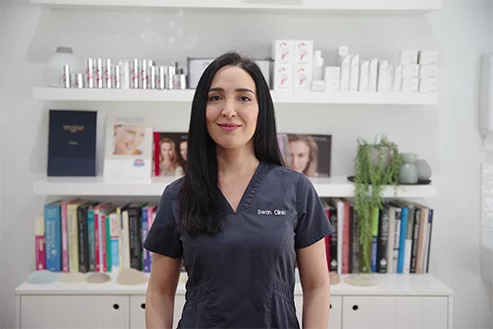
At Swan Clinic, fractional CO2 laser is a medical skin resurfacing procedure performed under the care of Dr Hadi. Treatment is tailored to each patient following a thorough consultation, with a focus on safety, informed consent and realistic expectations.
Fractional CO2 laser is a medical procedure that uses focused light to precisely create columns of thermal energy which can improve texture and fine lines in suitable patients. It can improve pigmentation and actinic keratoses.
How It Works
Fractional CO2 laser delivers microscopic columns of laser energy ("micro channels") into the skin in a controlled, fractional pattern. Each micro channel creates a zone of ablation at the surface and thermal stimulation in the deeper dermis. The surrounding skin between each channel remains intact, which supports healing.
This combination of surface resurfacing and dermal heating stimulates a natural wound-healing response, including new collagen production. Results develop gradually over time as the skin repairs and remodels. Because ablation is delivered in a fractional pattern, only a portion of the skin surface is treated at any one time, while the thermal energy penetrates more completely into the deeper layers.
Conditions It May Help With
In suitable patients, fractional CO2 laser may be considered for:
- Fine lines and wrinkles
- Acne scars and traumatic scars
- Stretch marks
- Large pores
- Uneven skin colour and hyperpigmentation
- Sun‑damaged skin
- Reduced skin elasticity
- Laxity around the eyelids in selected patients
- Rough or uneven skin texture
Suitability depends on individual skin type, medical history, previous treatments and personal circumstances. Not all patients will be appropriate candidates, and this will be assessed at consultation.
Fractional vs Full CO2
Traditional full-ablative CO2 laser is associated with longer downtime and a higher risk of complications. Fractional CO2 delivers energy in a scattered pattern rather than to the entire surface, which is associated with a reduced downtime and complication profile compared to full ablation. Treatment parameters can be adjusted to address different concerns — from deeper lines and scars to superficial pigmentation — depending on what is clinically appropriate for each patient.
Before Your Procedure
Consultation
Every patient is required to attend an in-person consultation with Dr Hadi before proceeding. This will include:
- Discussion of your concerns and treatment goals
- Review of your medical history, medications and known allergies
- Assessment of your skin type and clinical suitability
- Explanation of the procedure, risks, benefits and realistic outcomes
- Discussion of alternative treatment options, including non-treatment
- A cost estimate
Pre-Treatment Preparation
Dr Hadi will provide personalised pre-treatment instructions at your consultation. These may include:
- If your skin is prone to post-inflammatory hyperpigmentation (PIH), a dedicated skin preparation protocol will be required for 4 weeks prior to your procedure. Dr Hadi will prescribe an appropriate plan at consultation
- Prescribed antiviral and/or antibiotic medications may be recommended in the days before treatment to reduce the risk of cold sore (herpes) reactivation or bacterial infection. Please inform Dr Hadi of any medication allergies
- Avoid all direct and indirect sun exposure for at least 14 days before treatment — including outdoor activities such as golf, gardening and walking
- Wear comfortable clothing on the day that you do not mind being stained
- Bring a large hat to protect your skin from the sun when leaving the clinic
- Purchase a gentle liquid cleanser (such as Cetaphil or CeraVe) and a physical block SPF 50+ containing titanium dioxide or zinc oxide ahead of your recovery
On the Day of Treatment
Topical numbing cream and/or local anaesthetic will be used to manage discomfort. Protective eyewear is worn throughout. Most patients describe the sensation as warmth or prickling. Cooling and topical products are applied after treatment, and written aftercare instructions are provided before you leave. Treatment time varies depending on the area being treated.
Recovery and Downtime
Recovery varies between individuals and depends on the treatment settings used, area treated and individual healing response. The following are normal and expected after treatment:
- Dryness and skin tightness
- Redness and swelling
- Darkening of the skin and rough texture, typically from days 2–3
- Itching
- Mild discomfort in the first few hours, manageable with recommended medication
- Skin peeling and textural changes as the surface sheds
- Milia (small white bumps) that generally resolve within 7–10 days
- Possible cold sore reactivation in patients with a herpes history
Most patients plan for 3-7 days away from work or social commitments. More intensive treatment settings are associated with longer recovery. Individual experience will vary.
Mandatory Post-Treatment Care
Adherence to aftercare is essential for safe healing. Dr Hadi's instructions will include:
- Continue any prescribed antivirals and antibiotics for the full course
- Avoid all UV exposure for the first 5 days
- Minimise UV exposure for the following 10–14 days
- Avoid skincare actives during initial recovery — including AHAs, beta hydroxy acids and Vitamin C
- Pain relief: Paracetamol or Ibuprofen may be taken as needed
- Moisturise regularly: La Roche Posay Cicaplast Baume B5+ applied 3–4 times daily is recommended; Sorbolene, Cetaphil moisturiser or CeraVe are also appropriate alternatives
- Gentle cleansing from Day 2: Apply a small amount of gentle liquid cleanser diluted with water using clean fingertips in a soft circular motion once daily. Rinse, pat dry with a clean towel and reapply moisturiser. Do not pick, scratch or rub the skin
- From Day 3 outdoors: Apply SPF 50+ and wear a large hat if going outside
- Do not touch the treated area with bare hands — use clean gloves to minimise infection risk
Possible Risks and Adverse Effects
As with any medical procedure, fractional CO2 laser carries risks. These will be discussed with you in detail before you consent to treatment and include:
- Infection (uncommon when aftercare instructions are followed)
- Hyperpigmentation or hypopigmentation
- Ulceration
- Scarring (rare)
Contact Swan Clinic promptly if you experience unexpected pain, increasing redness, pus, blistering or any other concerning symptoms during recovery.
Who Should Not Have This Treatment
Fractional CO2 laser is not suitable for patients who:
- Have used isotretinoin (Roaccutane) within the past 6 months
- Have had recent laser, IPL or chemical peel treatments
- Have a history of keloid scarring
- Have a history of poor wound healing
- Have an impaired immune system
- Have scleroderma or another autoimmune condition
- Have a history of extensive radiation therapy
- Have any active bacterial or viral infection in or near the treatment area
- Are pregnant or breastfeeding
- Have or have had skin cancer (BCC, SCC or melanoma) in or near the treatment area within the past 3 months
- Have demonstrated abnormal responses (prolonged redness, pigment changes) on patch testing
A complete and accurate medical history must be disclosed at consultation to allow Dr Hadi to assess suitability safely.
Skin Health and Sun Protection
Fractional CO2 laser is used in the clinical management of sun-damaged skin and, in some settings, as part of the treatment of certain precancerous lesions such as actinic keratoses. Some early research suggests that by removing sun-damaged skin cells and improving overall skin quality, fractional CO2 laser may contribute to reducing skin cancer risk in selected high-risk patients. This research is at an early stage, findings are not yet conclusive, and this treatment is not a proven or approved method of skin cancer prevention. It does not replace sun protection, medical review or regular skin checks.
Swan Clinic encourages all patients to:
- Use daily broad-spectrum SPF 50+ sunscreen
- Wear protective clothing and seek shade during peak UV hours
- Attend regular skin examinations with their GP or dermatologist
- Have any new, changing or non-healing lesions reviewed promptly
Our Approach at Swan Clinic
Fractional CO2 laser at Swan Clinic is provided within a medical setting, integrating surgical, dermatological and aesthetic clinical experience. Dr Hadi's approach prioritises careful patient selection, transparent communication about realistic outcomes and structured aftercare.
- Thorough assessment and personalised treatment planning
- Clear explanation of risks, benefits and alternatives
- Structured follow-up and aftercare support
This information is general in nature and does not constitute personalised medical advice. Individual results vary and cannot be guaranteed. A formal in-person consultation with Dr Hadi is required to assess whether this treatment is appropriate for your circumstances.